
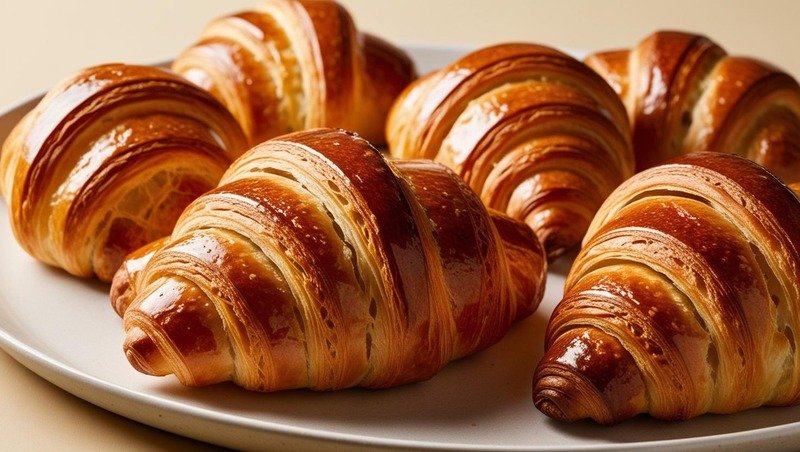
A Brief History of the Croissant
Few things are more comforting and luxurious than biting into a perfectly baked croissant. The croissant, a French pastry beloved around the world, symbolizes indulgence. When it comes to the best croissants in Paris, nothing compares. The crisp, golden exterior and delicate flakes scatter with each bite. The soft, buttery interior turns a croissant into a masterpiece of texture and flavor. I’ve tasted the best croissants in Paris and beyond. I appreciate the unique qualities that make these pastries irresistible. I’ve had croissants in many cities around the world—Brussels, Paris, Toronto, Amsterdam, New York, London, and beyond. But one thing remains true: not all croissants are created equal. People often associate the croissant with France, but it actually originates in Austria. The croissant’s ancestor, the kipferl, is a crescent-shaped bread that dates back to at least the 13th century. According to legend, the kipferl inspired the croissant in the 17th century after the Ottoman Empire’s defeat during the siege of Vienna. The shape mimics the crescent moon of the Ottoman flag. In the 1830s, Austrian baker August Zang opened a Viennese bakery in Paris. The French quickly adopted the recipe and perfected it, transforming it into the buttery, flaky pastry we know and love today.The Best Croissants Are in Paris—But One Stands Out
Over the years, I’ve made it a habit to sample croissants wherever I travel. From boutique bakeries in London to artisanal shops in New York, I’ve enjoyed many great pastries. But nothing compares to the croissants in Paris. The standards are simply higher. Even smaller neighborhood boulangeries produce beautifully laminated, buttery pastries that are hard to beat. While many Parisian boulangeries offer croissants of equal excellence, one stands out for me—Ritz Paris Le Comptoir. Their croissant is unique in both shape and experience. Unlike the traditional crescent form, theirs is rectangular. This modern twist feels elegant without being gimmicky. The texture is incredibly flaky, with a satisfying crunch that gives way to soft, richly flavored layers inside. Their pain au chocolat, also rectangular, is equally impressive. It’s filled consistently throughout, so every bite carries the perfect balance of buttery pastry and smooth chocolate. I’ve visited some of the most well-known spots in Paris. Pâtisserie Stohrer, the oldest boulangerie in Paris, is undeniably charming with its history and classic offerings. Their croissant is technically well made, and I appreciate the tradition it represents. However, it didn’t stand out in flavor or texture compared to others. I also visited Cédric Grolet, famous for his intricate pastries. His croissant is good—beautifully made, elegant in appearance. But like Stohrer, it didn’t feel especially memorable to me. Both are excellent in their own right, but I prefer something flakier, with a more satisfying bite.A Close Second: Boulangerie Paul in Brussels
Surprisingly, a strong contender that came close to Ritz Le Comptoir wasn’t in Paris at all, but in Brussels—at Boulangerie Paul. I had their croissant and pain au chocolat. Both were exceptionally flaky, with layers that shattered at each bite. The flavor was rich, and the texture airy and satisfying. The overall experience was well balanced. The pain au chocolat had a lovely distribution of chocolate and that perfect pastry crispness. It’s the kind of croissant you remember—not just because it tasted good, but because it felt just right. Whether in Paris or a charming spot in Brussels, discovering an excellent croissant never gets old. It reminds me how much beauty there is in mastering the basics—with just flour, butter, and time. For the address of the boutique Ritz Le Comptoir, visit this Ritz Paris Le Comptoir site.
Read more on the Chipmunk On The Hunt blog for inspiration and ideas.
